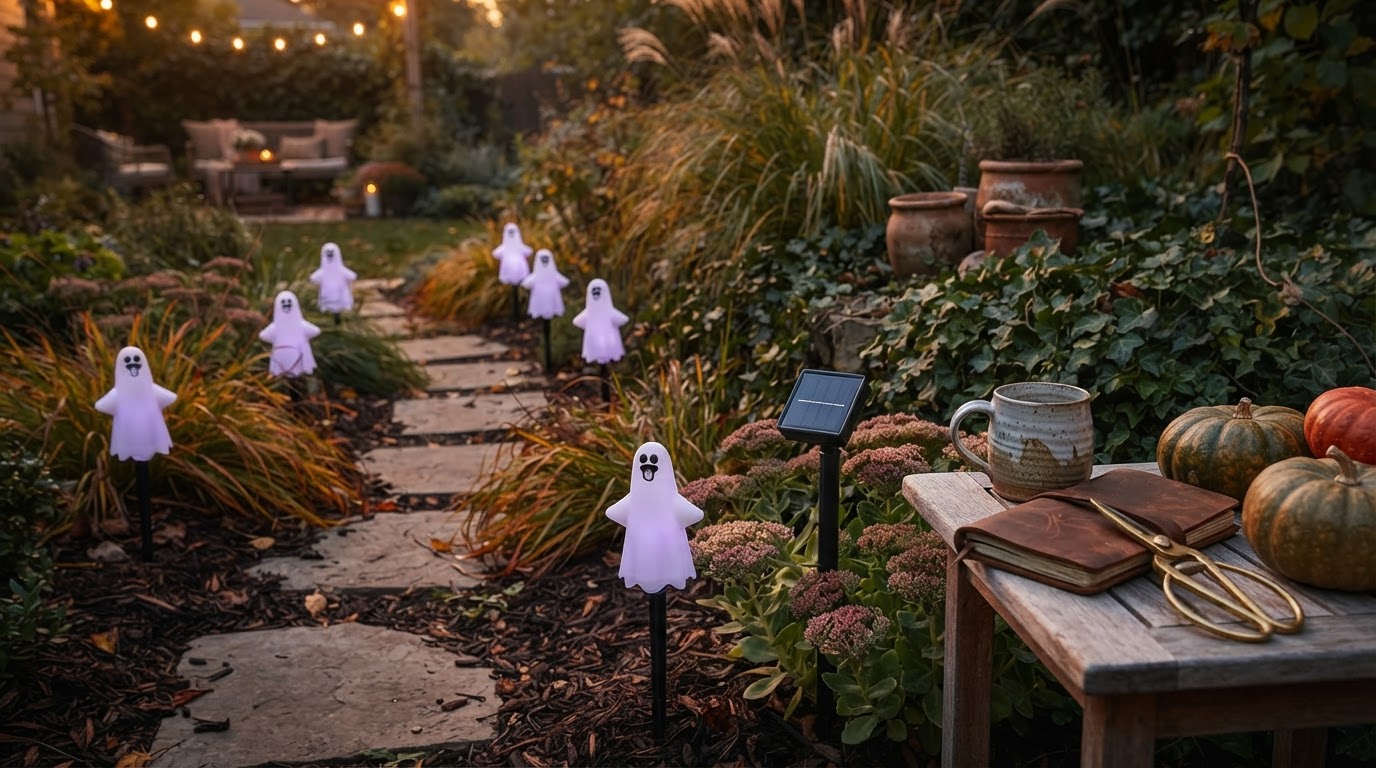
Optimizing Solar Spooky Light for Garden Landscapes
 Maya ChenContributing Editor
October 21, 2026. This technical analysis explores the implementation of high-efficiency solar lighting within residential garden ecosystems. It is written for homeowners seeking to balance festive aesthetics with energy-independent infrastructure.
The Efficiency Gap in Seasonal Lighting
The conventional wisdom says that festive lighting is inherently wasteful, a temporary drain on the grid that justifies poor durability for short-term use. Here's the part nobody talks about: the average plug-in seasonal display can increase localized energy consumption by up to 30% during peak evening hours, often relying on low-grade plastic components that fail within a single season. According to Balsam Hill, sustainable solar lights represent a necessary shift toward clean and renewable energy, converting sunlight into electrical power to eliminate the carbon footprint of traditional holiday displays. However, most consumers overlook the physics of solar collection in late October. In the Northern Hemisphere, daylight hours diminish precisely when demand for illumination peaks. This creates a performance deficit where standard decorative lights fail to hold a charge past 9:00 PM. When integrating [solar powered Halloween decorations outdoor](/blog/solar-powered-halloween-decorations-outdoor), the primary challenge isn't the aesthetic, but the photovoltaic conversion rate. Many retail options utilize amorphous silicon panels which operate at a meager 6-10% efficiency. This leads to the "dimming ghost" effect, where lights flicker out long before the evening festivities conclude. To maintain a consistent perimeter, one must account for the specific placement of [solar Halloween garden lights](/blog/solar-halloween-garden-lights) relative to tree canopies and structural shadows that become more pronounced during the fall equinox.
Technical Integration of Solar Spooky Light
Photo by Terrence Henry on Pexels
Solar Spooky Light addresses these systemic inefficiencies through hardware stabilization. While the market is saturated with disposable units—such as the basic LED Ghost Hand Lights Set cited by Outdoor Solar Outlet which serves as a low-cost entry point—Solar Spooky Light focuses on the longevity of the lithium-ion internal battery. Run the math: a standard Ni-MH battery found in budget stakes typically degrades after 500 charge cycles and loses significant capacity in temperatures below 40°F. By contrast, the Solar Spooky Light architecture is designed to maintain a consistent discharge rate even as ambient temperatures drop during October nights. The integration of solar spooky lights into a broader landscape design requires an understanding of lumen output versus battery density. Unlike the 40 LED string lights found at Michaels, which distribute power across a wide surface area and often suffer from voltage drops, Solar Spooky Light concentrates its energy storage to ensure the spectral quality of the light remains constant. This is critical for maintaining the intended "spooky" ambiance; a fading LED shifts its color temperature, often turning a sickly blue-white rather than the intended high-contrast glow. Furthermore, by utilizing waterproof housing rated for sustained autumnal rain, these units avoid the internal corrosion that typically plagues solar powered Halloween decorations outdoor after the first major storm. The hardware is not merely decorative; it is a weather-resistant node in a decentralized garden lighting network.
Framework for Sustainable Garden Illumination
Transitioning to a solar-reliant garden requires a move away from the "more is better" mentality found on platforms like Pinterest, which frequently highlights DIY Dollar Tree solutions that lack the circuitry for long-term outdoor survival. A professional installation of solar halloween garden lights should follow a rigid criteria for placement and maintenance to ensure the system doesn't become e-waste by November. I’ll change my mind when I see a plug-in incandescent string light that can match the zero-cost operating overhead of a properly positioned solar array over a three-year period. Until then, the data favors high-density solar units.
- Prioritize monocrystalline solar panels for a 15-20% higher energy conversion rate in overcast conditions.
- Verify the IP65 or higher waterproof rating to ensure protection against low-pressure water jets and heavy rain.
- Map the garden's "solar window," ensuring at least six hours of unobstructed southern exposure.
- Select units with automated dusk-to-dawn sensors to prevent unnecessary battery drain during daylight hours.
- Coordinate the placement of solar spooky lights to utilize reflective surfaces, such as white garden stones or fencing, to amplify perceived brightness without increasing power draw.
- Inspect the battery housing for accessible seals, allowing for seasonal maintenance rather than total unit replacement.
Sources
Photo by https://kaboompics.com/ on Pexels
- Solar Halloween Yard Decorations - LED Ghost Hand Lights Set
- Sustainable Solar Lights as Halloween Décor - Balsam Hill
- Solar Powered Halloween Lights 40 LED with 3D Pumpkin Bat Ghost ...