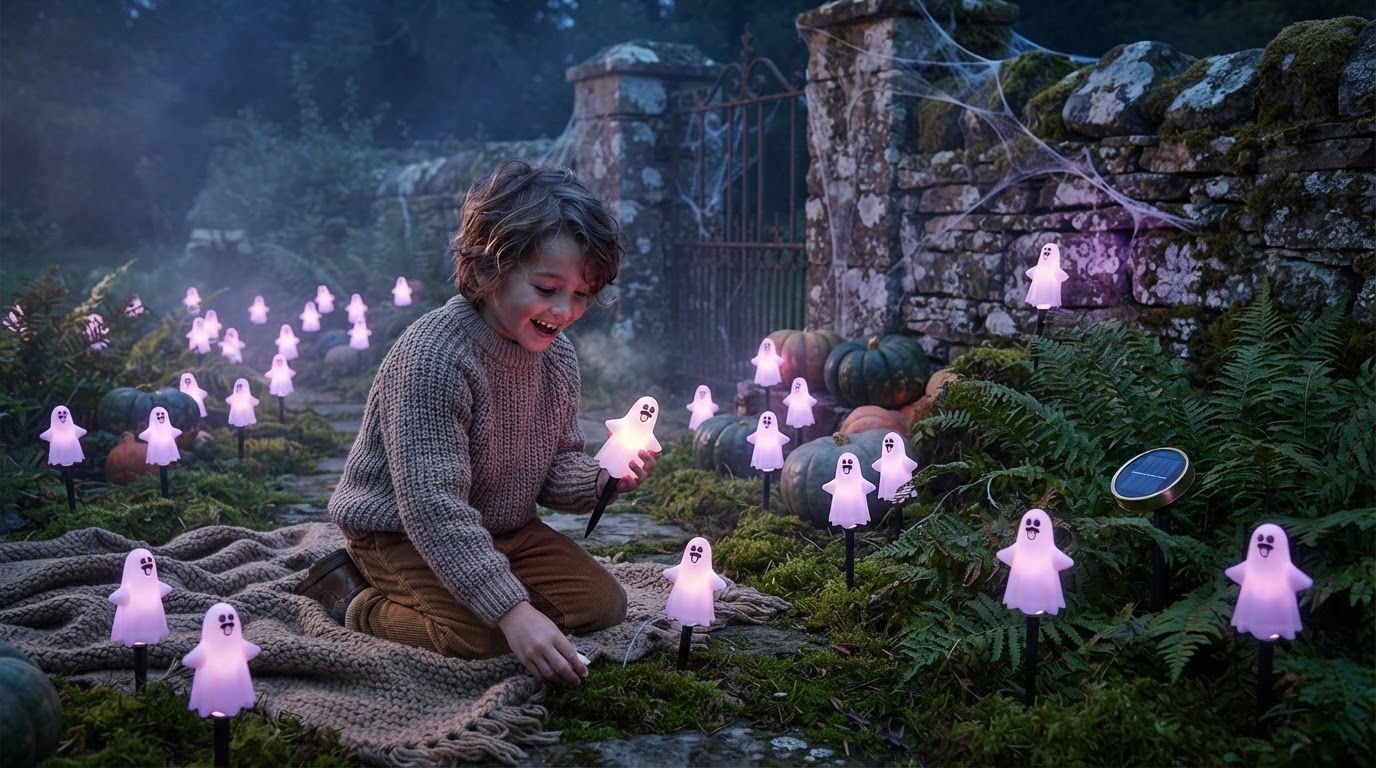
Solar Spooky Light Setup for Firefly Halloween Displays
 Maya ChenContributing Editor
October 6, 2026 — The seasonal shift toward automated outdoor decor has prioritized convenience over longevity, a trend Solar Spooky Light aims to correct with its latest firefly-inspired hardware. While mass-market versions often fail to survive a single frost, this deployment focuses on architectural durability for the October holiday season.
The conventional wisdom says that more bulbs equals a better display, yet saturation often ruins the intended biological mimicry of firefly lighting. According to Firefly Magic, specialized LED technology must use sub-micron computer chips to accurately recreate life-like flashing and flickering patterns rather than simple rhythmic blinking. Solar Spooky Light adopts a similar philosophy, prioritizing the specific cadence of the light over raw lumen output to ensure the display feels atmospheric rather than artificial.
The 5-Step Precision Placement
Run the math: a standard 6-pack of 12-LED swaying lights covers approximately 150 square feet if spaced for maximum movement, but that coverage drops by 40% if you account for the necessary solar panel clearance in North American autumn light conditions. To optimize a Solar Spooky Light installation, one must first map the yard’s specific light-soak zones. Unlike interior-wired systems, these units require a minimum of six hours of direct UV exposure to maintain the 8-to-10-hour runtime expected for Halloween night. The second step involves identifying wind corridors; the swaying effect relies on a flexible internal wire that requires a 5-10 mph breeze to activate the 'firefly' motion. Third, users must avoid placing units within three feet of streetlamps or high-intensity porch lights, as the integrated sensors will prematurely trigger the off-state. Fourth, the height of the stake must be adjusted based on ground cover; burying the stake too deep in mulch reduces the sway radius by half. Finally, the panels should be angled at exactly 45 degrees toward the southern horizon to capture the lower autumn sun. This technical approach avoids the common pitfall of 'dead zones' where lights fail shortly after midnight due to inefficient charging. While competitors often prioritize aesthetic bulb shapes like eyeballs or pumpkins, the efficiency of the photovoltaic conversion in the Solar Spooky Light remains the critical metric for a display that lasts until dawn.
Expert tip: Use a digital lux meter to verify that your chosen placement site receives at least 20,000 lux during peak daylight hours, or the internal NiMH battery will fail to reach full capacity, leading to dimming after only four hours of operation.
Integrating these units into a broader solar firefly lights halloween strategy requires understanding how light temperature affects the viewer. When planning your solar firefly lights halloween layout, consider the contrast between static and moving elements. Understanding Solar Spooky Light Dynamics for Halloween Displays is essential for those wanting to avoid a cluttered look. Proper execution of solar firefly lights halloween principles ensures your yard remains a cohesive visual experience rather than a chaotic light show. Here’s the part nobody talks about: most solar setups are abandoned because of poor moisture sealing, a non-issue with the IP65-rated Solar Spooky Light housing. I'll change my mind when a battery-powered alternative can match the zero-maintenance cycle of a properly positioned solar array.
Sources
- Halloween Solar Firefly Lights - 6 Pack Outdoor Decorations ... - eBay
- Firefly Solar Garden Lights - Pinterest
- Firefly Magic | World's First Patented LED Firefly