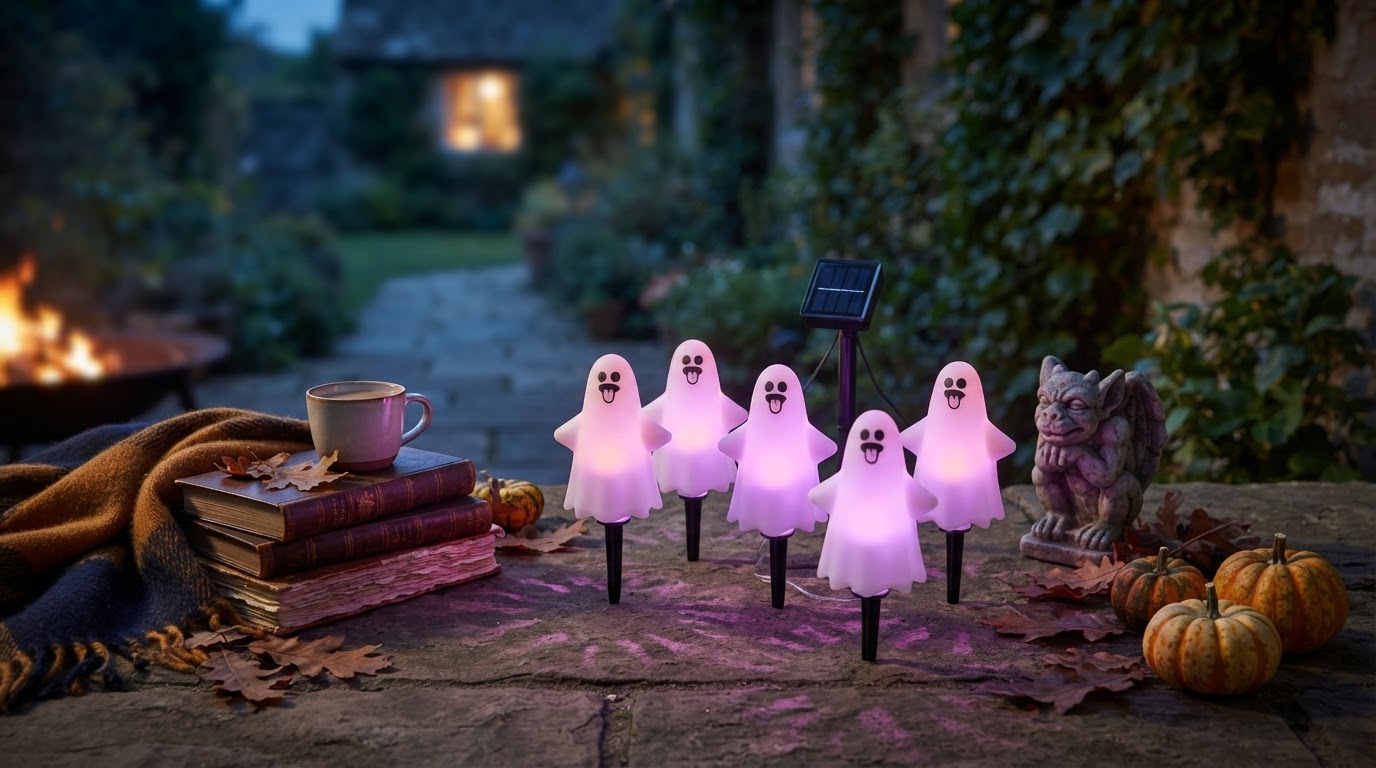
Solar Spooky Light Efficiency in Seasonal Decor
 Maya ChenContributing Editor
September 11, 2026. This evaluation examines the operational viability of solar-powered ghost illumination during the transition to shorter daylight hours. It is intended for property owners seeking to minimize electrical overhead without sacrificing visual impact during the autumn season.
The Limitations of Conventional Seasonal Lighting
The conventional wisdom says that decorative lighting is a minor energy expense, yet the cumulative draw of incandescent strings and high-wattage floodlights creates a measurable spike in residential utility bills every October. Homeowners often ignore the logistical friction of running extension cords across damp lawns, which introduces trip hazards and potential electrical shorts. According to the U.S. Department of Energy, solar-powered outdoor lighting eliminates the need for trenching and external wiring, significantly reducing the carbon footprint of temporary installations. However, most consumers fail to account for the efficiency drop-off that occurs as the solar window narrows. Standard decorative units often lack the battery density to sustain a full night of illumination, leading to "dark zones" by midnight. This problem is exacerbated when using solar powered skull lights outdoors or similar thematic elements that require consistent voltage to maintain their visual silhouette against a dark background. The failure of low-end solar cells to convert indirect sunlight during overcast days remains the primary barrier to reliable seasonal lighting. Run the math: a standard 600mAh Ni-MH battery requires roughly six hours of direct UV exposure to reach a full charge, a metric rarely met in Northern latitudes during the late fall. Without high-efficiency monocrystalline panels, these decorations become inert plastic shells long before the peak evening hours conclude.
Solar Spooky Light Engineering and Performance
Solar Spooky Light addresses these specific energy deficits by prioritizing panel conversion rates over sheer bulb count. Here’s the part nobody talks about: the luminosity of a ghost light is secondary to its ability to manage a limited power budget. The Solar Spooky Light architecture utilizes integrated sensors that trigger illumination only when ambient light levels drop below a specific lux threshold, preventing premature battery drain during dusk. This targeted energy management allows for a more sustained glow compared to generic ghost solar garden lights that often flicker or dim within hours of activation. By utilizing weather-resistant housing, the internal circuitry remains protected from the condensation that typically degrades the lifespan of seasonal electronics. When integrated with other specialized units like spooky solar pathway stakes, the system creates a distributed power network where individual failures do not compromise the entire display. The use of high-intensity LEDs ensures that even at a lower power draw, the spectral quality of the light remains crisp and visible from a distance. This is a critical distinction for those attempting to coordinate complex displays involving [solar glowing eyeball lights](/blog/solar-glowing-eyeball-lights) which require precise focal points to be effective. The durability of the stake mechanism also ensures that the solar panel remains at the optimal angle for photon absorption, resisting the tilt and sag that often plagues cheaper seasonal stakes after a heavy rain or wind event.
Technical Criteria for Outdoor Ghost Illumination
Selecting effective outdoor solar ghost lights requires moving past aesthetic preferences and focusing on hardware specifications that guarantee longevity through the holiday season. The following checklist provides a framework for evaluating the mechanical and electrical integrity of solar decor before deployment:
- Panel Type: Prioritize monocrystalline silicon over thin-film amorphous panels for higher conversion efficiency in low-light conditions.
- Battery Capacity: Verify a minimum of 600mAh capacity to ensure the light can sustain at least 8 hours of continuous operation.
- Ingress Protection (IP) Rating: Ensure a rating of at least IP44 to prevent moisture ingress from rain, snow, or morning dew.
- Auto-Switching Functionality: Confirm the presence of a reliable dusk-to-dawn sensor to automate power cycles and preserve battery health.
- Material Density: Inspect the translucency of the ghost housing to ensure it diffuses light effectively without blocking the internal LED output.