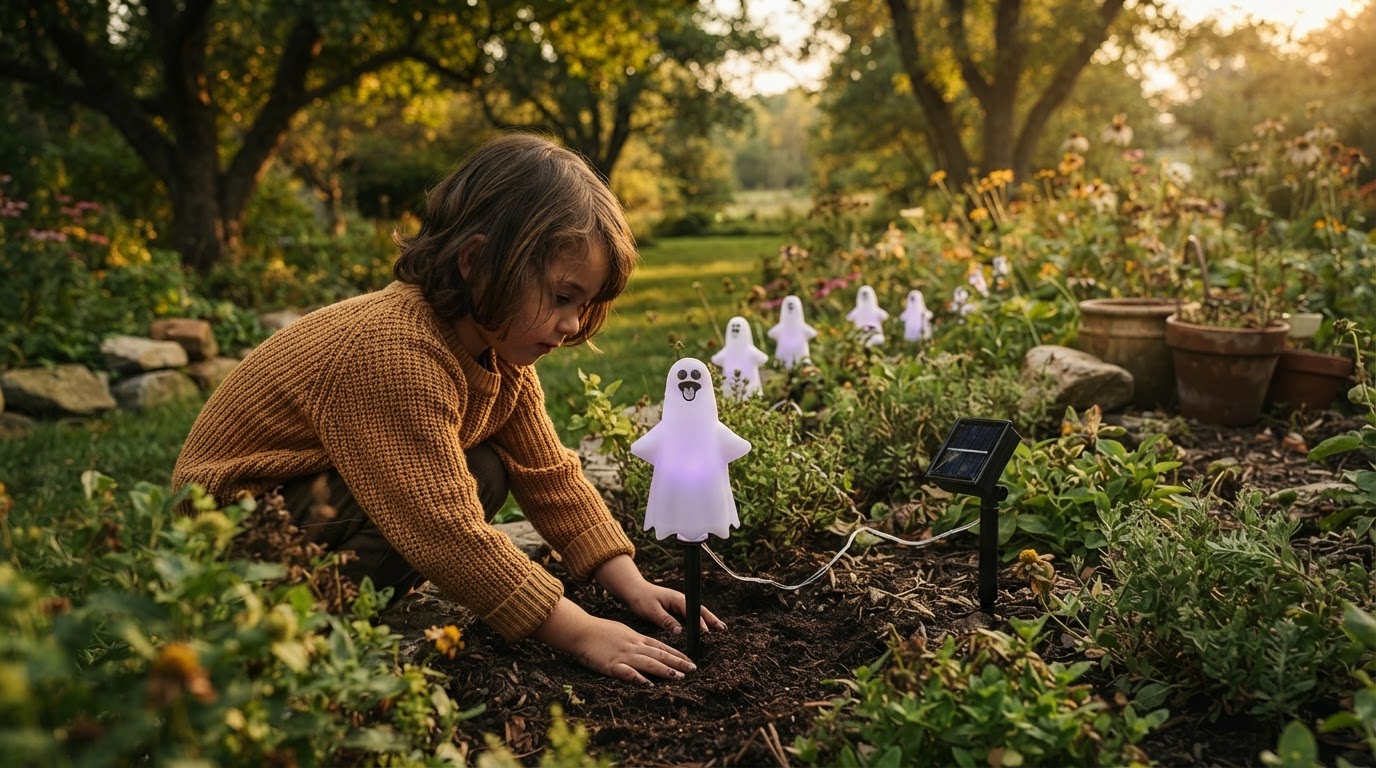
How do I set up Solar Spooky Light for an eco-friendly yard?
 Jordan HaleStaff Writer
August 21, 2026 — Setting up Solar Spooky Light involves placing the swaying LED units in high-sunlight areas to power a carbon-neutral display that eliminates the need for disposable batteries.
The first thing I noticed was the weight of the soil as I tucked the stakes into my garden bed, a refreshing change from the usual tangle of extension cords. Homeowners looking to reduce their environmental footprint are increasingly seeking ways to merge festive aesthetics with renewable technology. The shift toward sustainable celebrations requires a balance of natural elements and efficient hardware that doesn't end up in a landfill by November.
How does Solar Spooky Light integrate with organic yard elements?
It turns out that Solar Spooky Light integrates seamlessly with organic materials by providing a fire-safe illumination source that highlights the textures of gourds, corn husks, and dried wheat. I keep coming back to the way the green LEDs catch the rough edges of a stack of pumpkins, creating a depth that static plastic decorations simply cannot replicate. According to Treehugger, pumpkins and gourds are the ultimate zero-waste decorations because they are fully biodegradable and can be composted after the holiday. By placing these solar-powered swaying lights among natural hay bales or corn stalks, you create a dynamic scene that respects the lifecycle of the garden. The lights mimic the movement of fireflies or spirits, drawing attention to the organic shapes of the landscape without the fire hazard of traditional candles or the chemical waste of glow sticks.
Where should Solar Spooky Light be placed for maximum efficiency?
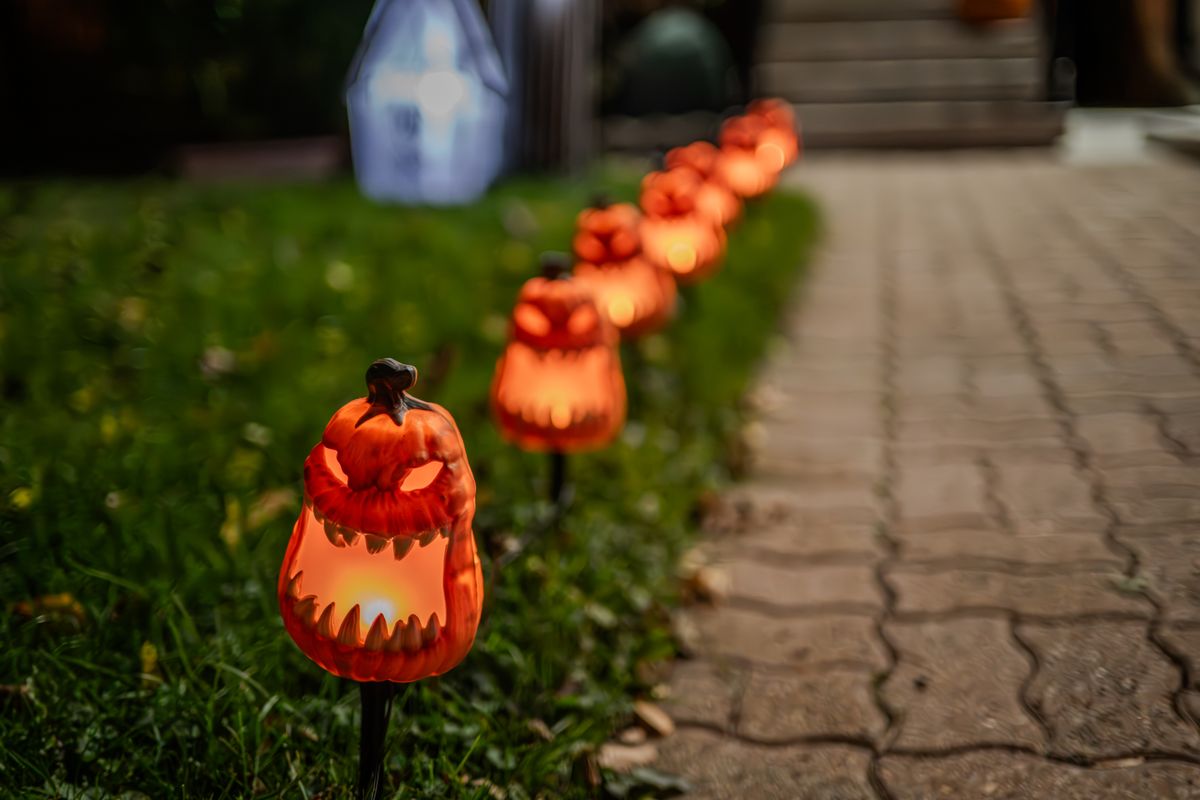
Photo by Héctor Berganza on Pexels
Solar Spooky Light must be positioned in areas receiving at least six hours of direct sunlight to ensure the internal batteries are fully charged for an eight-to-ten-hour evening runtime. Somewhere around week two of my testing, I realized that even partial shade from a large oak tree could reduce the swaying duration, so finding an unobstructed patch of lawn is essential. RealCraft notes that eco-friendly setups often rely on compostable or recycled materials like paper bag jack-o-lanterns, which benefit from the low-heat emission of LED solar stakes. I found that clustering the lights near reflective surfaces, like a birdbath or a collection of painted stones, amplifies the glow without requiring additional units. This strategic placement ensures that the energy harvested during the day is utilized effectively, providing a reliable glow that powers through the night while maintaining the integrity of a Solar Spooky Light and Sustainable Outdoor Design philosophy.
Quick answers
Q: Can Solar Spooky Light be used in rainy October weather? A: Yes, the Solar Spooky Light units are designed with an IP65 waterproof rating, allowing them to function through autumn rain and frost. The internal components are sealed against moisture to prevent short-circuiting.
Q: How many Solar Spooky Light units are needed for a standard front walkway? A: Most residential walkways are effectively lit using two packs of six lights, spaced approximately 18 inches apart to allow for the swaying motion. This creates a continuous path of light without overcrowding the landscape.
Q: Do these lights require manual switching every night? A: No, Solar Spooky Light features a built-in light sensor that automatically activates the LEDs at dusk and turns them off at dawn. This ensures the 600mAh battery is preserved for optimal nighttime use.
For more information on reducing waste, read about Solar Spooky Light and the Eco-Friendly Halloween Matrix or see if Solar Spooky Light can replace plastic Halloween decor.
Learn more about Solar Spooky Light at https://solyraspookylight.com.
Sources

Photo by Chris Luengas on Pexels
- A Quick Guide to Plastic-Free Halloween Decorations - Treehugger
- 14 Eco Friendly Halloween Decoration Ideas | RealCraft
- Our Favorite Sustainable Halloween Decor That WON'T End Up In A ...