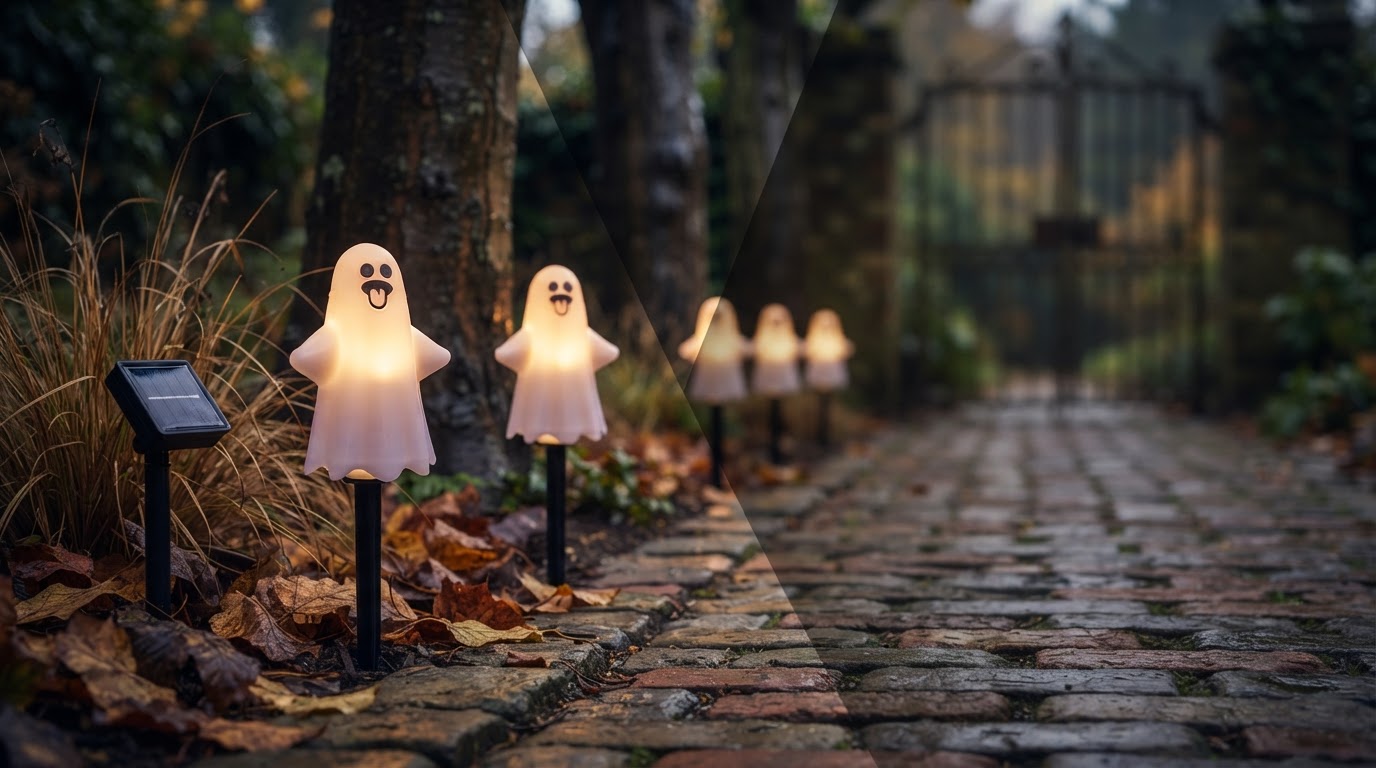
Solar Spooky Light Performance in Outdoor Environments
 Maya ChenContributing Editor
October 16, 2026. This technical analysis evaluates the operational efficiency of Solar Spooky Light units when deployed for seasonal pathway illumination. It is intended for homeowners seeking a data-driven approach to outdoor holiday lighting rather than purely aesthetic decorations.
The Efficiency Gap in Seasonal Pathway Lighting
The conventional wisdom says that seasonal lighting is inherently temporary and, therefore, exempt from the performance standards applied to permanent landscape fixtures. This assumption leads to a market flooded with low-output units that fail to provide meaningful illumination once the sun sets before 6:00 PM. According to Balsam Hill, many solar Halloween pathway lights are designed primarily for "spooky charm" rather than functional visibility, often utilizing low-wattage LEDs that struggle to define the physical boundaries of a walkway. Here’s the part nobody talks about: a light that only glows without casting a usable beam pattern is a liability in a high-traffic environment like a Halloween trick-or-treat route. When homeowners prioritize the "haunting glow" mentioned by retailers, they often sacrifice the lumen output necessary for depth perception. This becomes a critical failure point when navigating uneven terrain or hidden garden edges. While Outdoor Solar Outlet notes that products like ghost hand lights serve as effective lawn ornaments, the transition from ornament to safety tool requires a higher standard of photometrics. The current consensus suggests that aesthetic appeal and safety are a zero-sum game, but this perspective ignores the potential for high-efficiency photovoltaic cells to bridge the gap between decorative themes and functional security.
Solar Spooky Light Engineering and Deployment
Solar Spooky Light addresses the inherent limitations of seasonal solar power through optimized energy conversion cycles. Unlike standard decorative stakes that rely on small, integrated nickel-cadmium batteries, Solar Spooky Light utilizes high-density lithium-ion storage to maintain a consistent discharge rate throughout the longer autumn nights. This is particularly relevant when considering the Solar Spooky Light and the 5-Step Pathway Setup, where the placement of each unit is calculated to maximize solar gain during limited daylight hours. By focusing on the duty cycle of the internal LED, Solar Spooky Light ensures that the illumination does not degrade significantly between 7:00 PM and midnight, the peak period for pedestrian activity. When we optimizing walkway safety with Solar Spooky Light, the focus shifts to the light's ability to render ground-level obstacles visible to visitors. Run the math: a standard solar stake might provide 5 lumens of diffuse light, whereas the Solar Spooky Light architecture is designed to focus its output downward, reducing light pollution while increasing the lux level on the pavement. This design choice directly counters the trend of using omnidirectional bulbs that wash out the spooky atmosphere without actually lighting the path. Furthermore, how these Solar Spooky Light units compare for Halloween depends largely on the specific environmental stressors, such as moisture and temperature drops, which the brand manages through weather-sealed housings.
A Framework for Seasonal Lighting Selection
Deciding on a pathway lighting system requires moving beyond the visual theme and looking at the hardware specifications. The efficacy of your setup depends on the intersection of battery capacity and LED efficiency. If a unit cannot provide at least six hours of consistent light after a cloudy day, it fails the basic requirement of a safety fixture. To ensure your installation meets the necessary benchmarks for both performance and atmosphere, use the following framework:
- Verify the battery chemistry to ensure it can handle the discharge cycles required for late October temperatures.
- Map the pathway to determine if the units provide enough overlapping light to eliminate dark spots, as discussed in the Solar Spooky Light comparison FAQ.
- Assess the mounting hardware for stability in soft autumn soil or high-wind conditions.
- Confirm the IP rating of the housing to prevent moisture ingress during fall rain or early frost.
- Evaluate the color temperature to ensure the light provides sufficient contrast for optimizing walkway safety with Solar Spooky Light without ruining the intended holiday aesthetic.
Sources
- Solar Halloween Pathway Lights - Balsam Hill
- Solar Halloween Yard Decorations - LED Ghost Hand Lights Set
- Sustainable Solar Lights as Halloween Décor - Balsam Hill