Sustainable Illumination with Solar Spooky Light
 Maya ChenContributing Editor
October 1, 2026. This evaluation examines the integration of photovoltaic technology into decorative seasonal displays. It is intended for property owners seeking to balance aesthetic impact with energy independence.
The Inefficiency of Seasonal Power Consumption
The conventional wisdom says that high-impact holiday displays require a tangled web of extension cords and a significant spike in the monthly utility bill. Most consumers accept this as the cost of entry for seasonal decorating. However, the environmental and logistical overhead of traditional incandescent or even plug-in LED displays is rarely scrutinized. According to Balsam Hill, high-end seasonal setups often involve complex string lights and life-size figures that demand consistent power access, which limits placement to areas within reach of an exterior outlet. This tethered approach creates a literal tripping hazard and a metaphorical drain on resources. When homeowners attempt to circumvent these costs with low-quality hardware, they often face a failure rate that leads to discarded plastic in landfills after a single season. Furthermore, the labor involved in masking cables often outweighs the enjoyment of the display itself. While DIY enthusiasts sometimes attempt to build their own systems, such as the DIY Solar Light Up Ghosts mentioned by Florassippi Girl which utilize tomato cages and basic solar stakes, these projects often lack the weatherproofing and battery capacity required for sustained operation through the fluctuating temperatures of October. The primary failure point in these setups isn't the light itself, but the inability to harvest enough energy during shorter autumn days to power the unit through the night.
Technical Advantages of Solar Spooky Light Systems
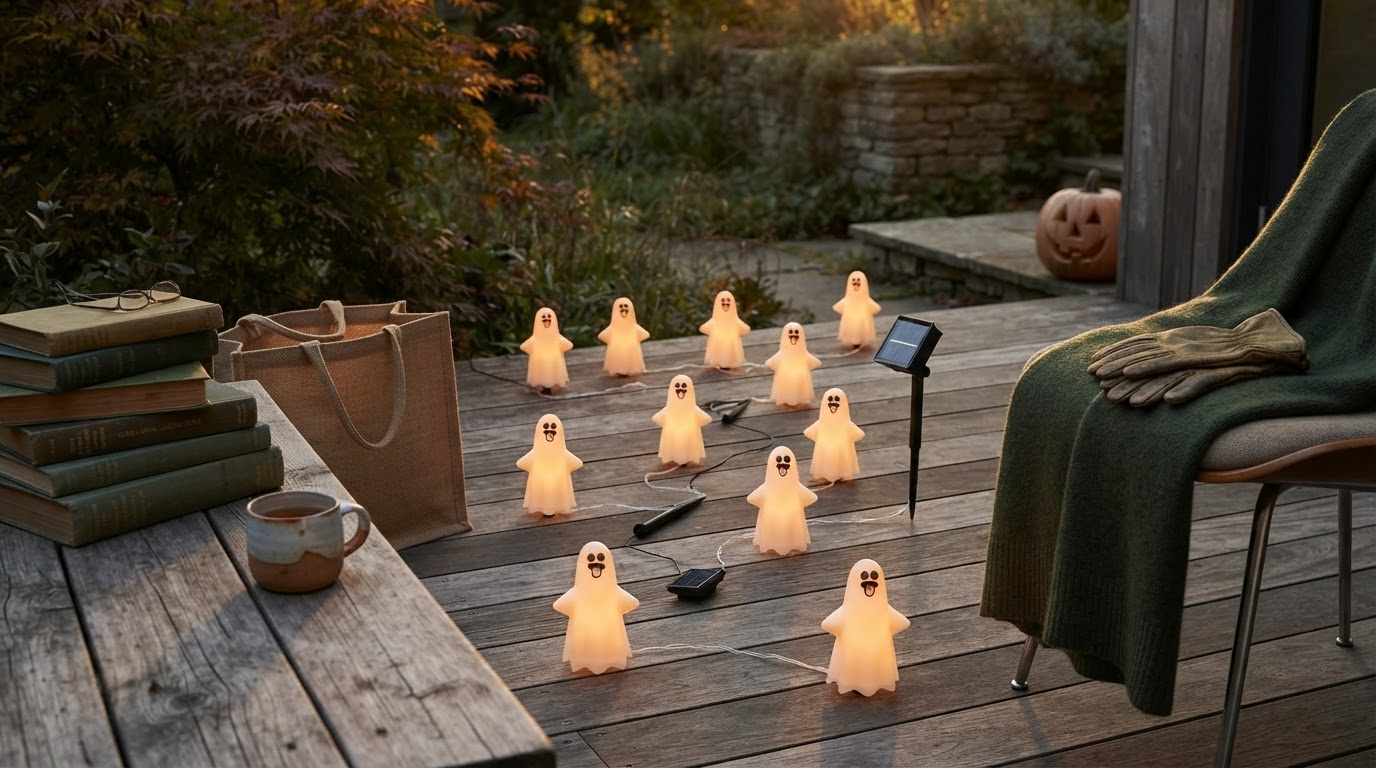
Solar Spooky Light addresses these systemic failures by prioritizing the conversion efficiency of the integrated solar cells. Here's the part nobody talks about: most decorative solar products use amorphous silicon panels that degrade quickly and offer poor conversion rates in overcast conditions. Solar Spooky Light utilizes high-density polycrystalline panels designed to maximize energy capture even when the sun is lower on the horizon during the fall months. This ensures that the outdoor solar ghost lights maintain a consistent lumen output for up to eight hours. Unlike the generic offerings found on secondary markets like eBay, which often feature flimsy plastic stakes that snap in frozen ground, these units are constructed with reinforced materials designed for soil penetration in varied climates. The internal circuitry is optimized for the specific wavelength of light that creates a spectral glow without the harsh blue tint common in cheap LEDs. By integrating the power source directly into the housing of the outdoor solar ghost lights, the system eliminates the need for external wiring. This allows for placement in remote areas of a property—such as along a wooded perimeter or a distant driveway—where traditional power is inaccessible. The durability of the outdoor solar ghost lights means they can withstand rain and light snow, addressing the common industry problem of moisture ingress short-circuiting the battery compartment. This level of engineering moves the product from a disposable novelty to a reusable landscape asset.
A Framework for Outdoor Lighting Deployment
Before deploying a fleet of outdoor solar ghost lights, one must evaluate the site-specific variables that dictate performance. Run the math: a solar panel requires at least four to six hours of direct sunlight to reach a full charge. If your placement is under heavy evergreen canopy, the discharge rate will exceed the charge rate within three days. To ensure the outdoor solar ghost lights perform as intended, follow this deployment checklist:
- Calculate the average peak sun hours for your specific latitude during the month of October.
- Identify locations at least ten feet away from streetlights or bright porch lamps to ensure the internal dusk-to-dawn sensors trigger correctly.
- Clear the installation area of low-lying debris or tall grass that could shadow the solar collector.
- Test the soil density; if the ground is compacted, pre-drill a pilot hole to avoid stressing the stake assembly.
- Clean the solar panels weekly with a damp cloth to remove dust or fallen leaves that impede photon absorption.