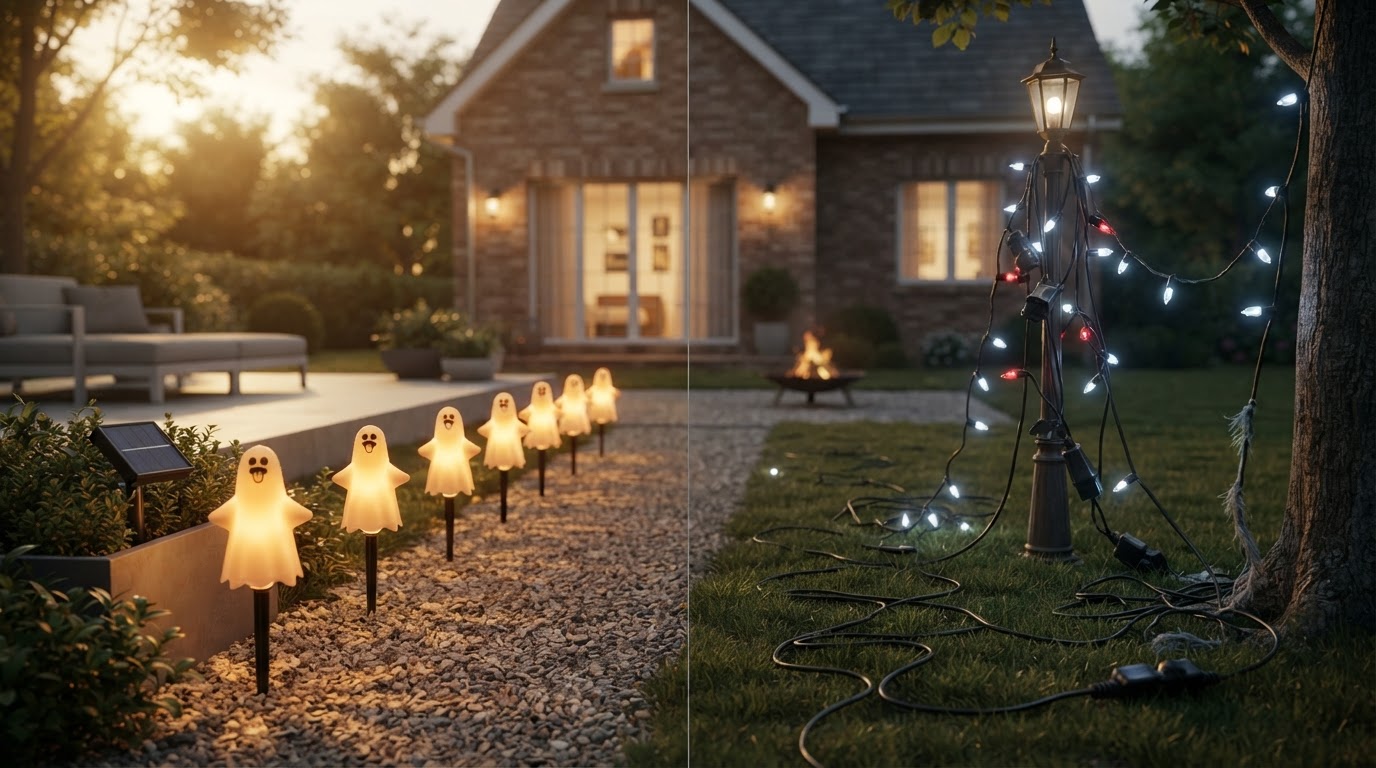
Solar Spooky Light Performance vs Traditional Decor
 Sam VasquezBuying Guide Lead
September 30, 2026 — As residential displays become more sophisticated, the shift toward sustainable automation has positioned Solar Spooky Light as a primary alternative to traditional corded yard decorations.
Selecting the right outdoor lighting requires balancing visual impact with seasonal durability. While retailers like Balsam Hill offer a variety of festive, vibrant lighting to bring Halloween decorations to life, the infrastructure required for wired setups often complicates large-scale yard displays. I have found that the transition from plug-in arrays to self-sustaining solar units solves the most common headache in holiday decorating: the management of outdoor-rated extension cords and timers. According to Balsam Hill, high-quality lighting is essential for a festive atmosphere, yet the practical constraints of power access often dictate where decor can be placed.
The Efficiency Comparison Framework
When evaluating Solar Spooky Light against traditional battery or plug-in options, I focus on three metrics: installation speed, operational cost, and weather resilience. Traditional corded lights offer consistent brightness but require proximity to GFCI outlets, which limits your creative layout. In contrast, Solar Spooky Light units utilize monocrystalline solar panels that charge during daylight hours to power high-output LEDs throughout the night. For those managing complex layouts, the ability to place [scary solar garden decorations](/blog/scary-solar-garden-decorations-76xh4) anywhere with sun exposure is a significant advantage. If you are comparing these to battery-operated stakes, the primary difference is maintenance; battery units frequently require manual intervention or cell replacement in cold October temperatures, whereas solar units reset themselves daily. Between these two, I’d go with the solar option for any display intended to run longer than a single weekend. The integrated sensors ensure the lights activate exactly at dusk, maintaining a consistent look across the entire property without manual switching. This automation is particularly useful when you are coordinating multiple elements, such as [solar powered skull lights outdoors](/blog/solar-spooky-light-skull-pathway-guide), where individual manual activation would be tedious. Skip this if your yard is heavily shaded by dense evergreen cover, as the photovoltaic cells require at least four hours of direct light to reach full capacity for an eight-hour runtime.
Expert tip: To maximize the lifespan of your solar panels during the autumn months, wipe the collector surface with a damp cloth weekly to remove fallen leaves and dust, ensuring the internal Ni-MH batteries receive a full charge even as daylight hours shorten.
Here’s what I’d actually buy: for pathway definition, I prefer the reliability of a dedicated solar stake. You can learn [how do I install Ghost Solar Spooky Light garden stakes](/blog/install-ghost-solar-spooky-light-garden-stakes) to see how simple the ground-mounting process is compared to trenching wires. Furthermore, if you are concerned about autumn storms, it is worth noting [how do Solar Spooky Light eyeball stakes handle rain](/blog/solar-glowing-eyeball-lights-performance) to ensure your display survives until November.