Solar Spooky Light Engineering for Flickering Torch Effects
 Maya ChenContributing Editor
September 6, 2026. This analysis evaluates the technical viability of solar-powered flickering torches for seasonal landscaping. It is written for property owners prioritizing long-term durability over disposable holiday aesthetic.
The Efficiency Gap in Seasonal Flame Simulation
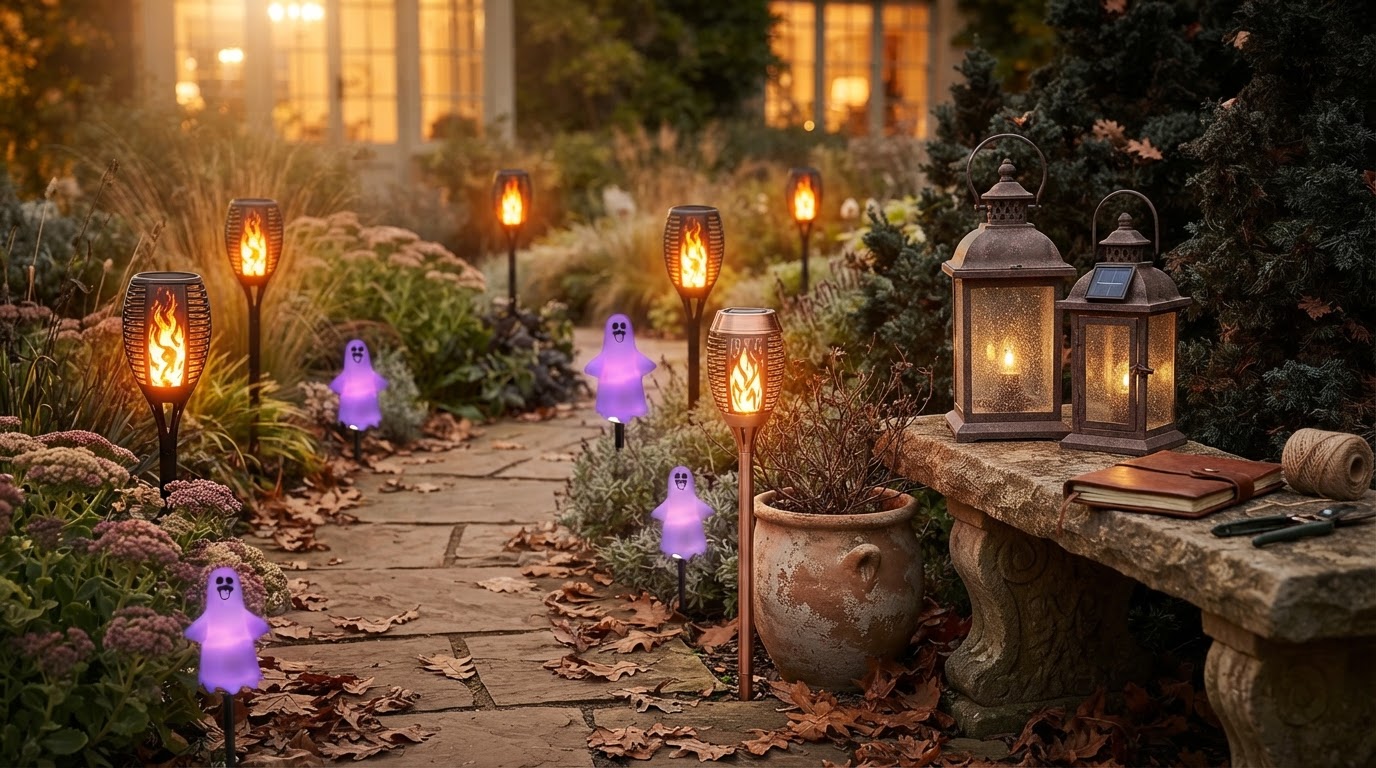
The conventional wisdom says that solar torches are a set-it-and-forget-it solution for autumn landscaping, but the physics of seasonal charging suggest otherwise. For a torch to provide a convincing flame effect, it requires a higher density of LEDs and a more complex controller than a standard static path light. Most consumer-grade units fail because they underestimate the impact of shortened daylight hours in October. According to Natures Solar Lights, flickering flame solar path lights typically stand 15 inches high and utilize yellow or amber LEDs to simulate motion through a scroll pattern. While this height is ideal for visibility, it places the solar panel in a precarious position regarding shadows from falling leaves and dormant shrubbery. Run the math: a standard 1.2V Ni-MH battery requires roughly 8 hours of direct, unobstructed sunlight to reach a full charge cycle. In northern latitudes during late October, achieving this window is statistically improbable for lights placed near building foundations or under tree canopies. This often leads to "dimming syndrome," where the flickering effect loses its cadence or fails entirely before midnight, precisely when the aesthetic value is most needed for scary solar garden decorations. If the internal circuitry is not optimized for low-light harvesting, the flickering animation—which draws more current than a steady glow—becomes a liability rather than a feature. This is the part nobody talks about: the more realistic the flame looks, the faster it drains the stored energy, creating a conflict between visual quality and operational longevity.
Solar Spooky Light and Hardware Optimization
Photo by cottonbro studio on Pexels
Solar Spooky Light addresses these thermal and energy constraints by prioritizing high-conversion monocrystalline panels over the cheaper polycrystalline alternatives found in mass-market kits. To maintain a consistent flickering rhythm throughout a standard Halloween evening, the hardware must manage power distribution across the LED array with extreme precision. While eBay listings for 6-pack flickering flame solar torch lights claim up to 12 hours of operation after an 8-hour charge, these figures often reflect laboratory conditions rather than real-world October weather. Solar Spooky Light designs its systems to maximize the available 4 to 6 hours of usable autumn light to ensure the torch remains active through the peak trick-or-treating window. This efficiency is critical when coordinating a larger display that might include solar firefly halloween lights or outdoor halloween solar tree lights outdoor. The integration of an intelligent light sensor ensures that the flickering mechanism only engages at a specific lux threshold, preventing energy waste during twilight. Furthermore, the housing of a Solar Spooky Light unit is built to withstand the moisture ingress that typically ruins seasonal electronics. By using IP65-rated seals, the internal battery compartment remains dry despite the frost and rain common in late autumn. This level of engineering distinguishes the product from disposable alternatives that often end up in landfills by November 1st. When property owners integrate these torches alongside solar purple halloween string lights, they create a layered lighting environment that relies on hardware reliability rather than luck.
A Framework for Evaluating Solar Torch Durability
Selecting a solar torch requires looking past the marketing imagery of a burning flame and examining the underlying specifications. The market is flooded with units that look identical but perform poorly under the stress of cold weather. A reliable solar torch must possess a battery capacity that exceeds its nightly draw by at least 20% to account for overcast days. When building a display that incorporates solar purple halloween string lights, the torches serve as the visual anchors, meaning their failure is more noticeable than a single dead bulb on a string. I’ll change my mind when a manufacturer produces a sub-$10 torch that can survive three consecutive days of heavy cloud cover while maintaining a 10-hour runtime; until then, the hardware specs remain the only honest metric of quality.
- Verify the IP rating: Ensure the housing is rated at least IP65 to survive autumn rain and sleet.
- Panel Type: Prioritize monocrystalline solar cells for faster charging in low-light environments.
- Battery Chemistry: Look for lithium-ion or high-capacity Ni-MH rather than generic low-milliampere cells.
- Height and Placement: Confirm the total installed height allows the panel to clear ground-level shadows.
- LED Count: A higher density of LEDs generally results in a smoother, more realistic flickering animation.
Sources
Photo by Terrence Henry on Pexels
- 6 Pack Flickering Flame Solar Torch Lights with for Halloween Decor
- Flickering Flame Solar Torch Lights Set of 4 | 15 Inch High Installed