Designing Eco Friendly Halloween Decorations Outdoor
 Jordan HaleStaff Writer
September 19, 2026. This guide explores how to integrate renewable energy and natural materials into a seasonal display. It is written for homeowners seeking to reduce their environmental footprint without sacrificing the visual impact of their holiday decor.
I stood on my front porch last October, watching the wind whip a shredded plastic spiderweb into the branches of my oak tree. The thin white fibers weren't just an eyesore; they were snagging local songbirds and eventually shedding microplastics into the soil I spent all spring tending. According to Treehugger, pumpkins and gourds are the ultimate in zero-waste Halloween decorations because they are fully biodegradable and can be composted or buried once the season ends. However, the challenge for most of us is making these natural elements visible after sunset without relying on disposable batteries or miles of PVC-coated extension cords. The first thing I noticed was how heavy the carbon footprint of a traditional 'spooky' yard really is, from the non-recyclable synthetic fabrics to the energy-draining incandescent bulbs that hum with a faint, expensive heat. Moving toward a sustainable setup meant rethinking the light source entirely. It turns out that the most effective way to highlight organic textures—like the rough skin of a Hubbard squash or the dry rustle of corn stalks—is through low-impact, targeted illumination that doesn't require a grid connection.
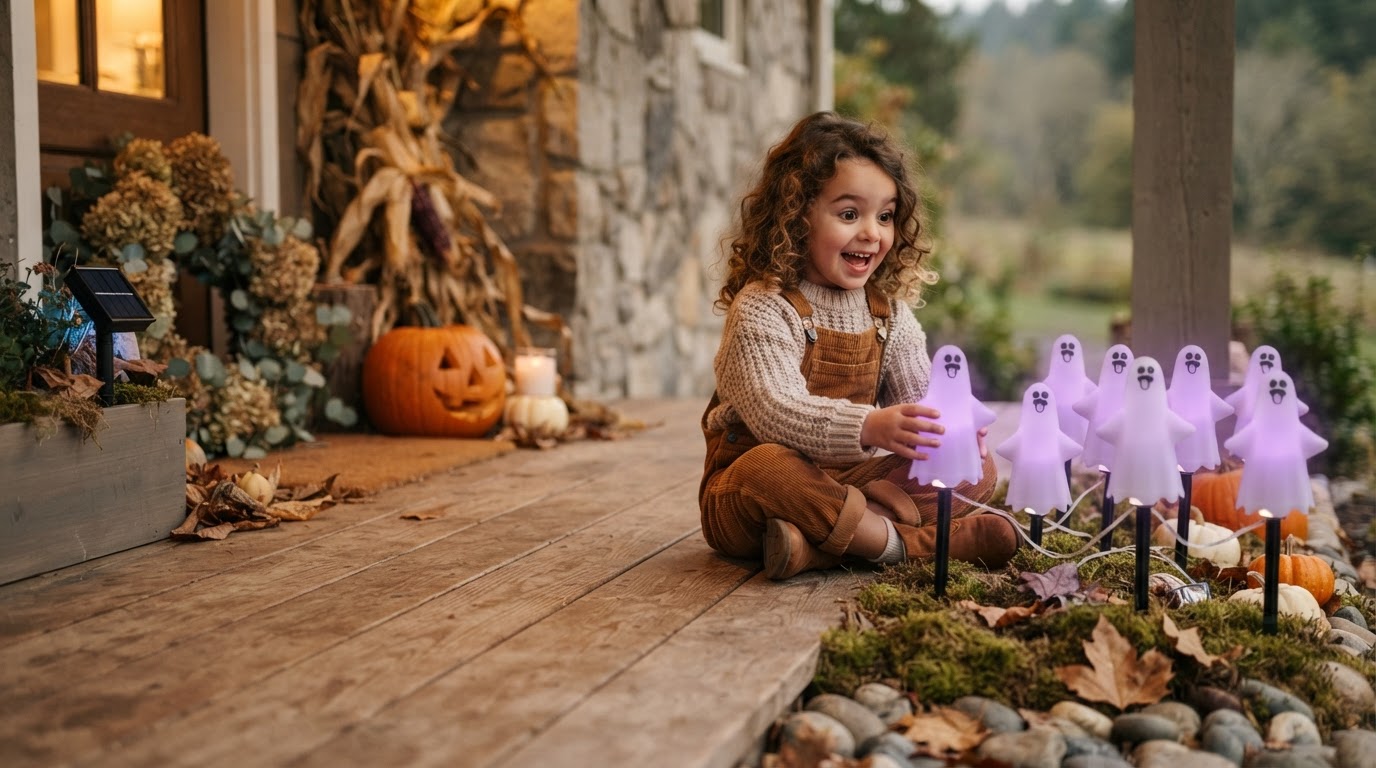
Transitioning to Solar Spooky Light changed the way I approached the layout of my yard. Instead of tethering my creativity to the nearest outdoor outlet, I began placing lights based on where the sun hit my garden beds during the day. Understanding [how Solar Spooky Light works for outdoor decor](/blog/how-solar-spooky-light-works-outdoor-decor) is essential here; these units harness sunlight to power internal cells that activate automatically at dusk. This autonomy allowed me to spotlight a cluster of heirloom pumpkins at the far edge of my property, far beyond the reach of my old extension cords. By integrating [solar Halloween garden lights](/blog/solar-halloween-garden-lights) directly into the soil, I created a layered effect that felt more like a haunted forest and less like a retail showroom. The warm glow from the LED elements inside the Solar Spooky Light housing is designed to last through the evening, providing a reliable flicker that mimics traditional lanterns without the fire hazard of open flames or the waste of tea lights. Somewhere around week two, I realized I hadn't touched a single power switch or replaced a battery, yet the yard felt more alive than ever. The durability of these units ensures they don't become part of the seasonal waste stream, standing up to early autumn rains and frost better than the flimsy plastic props found in big-box stores.
When building your own sustainable display, the goal is to balance visual drama with environmental responsibility. I keep coming back to the idea that a truly scary yard shouldn't be scary for the planet. Start by mapping your sunlight; for [spooky solar pathway lights performance](/blog/spooky-solar-pathway-lights-performance) to remain consistent, you need at least six hours of direct exposure. Once your lighting is placed, you can layer in compostable elements like corn husk garlands or wheat centerpieces, which RealCraft notes are excellent eco-friendly alternatives to synthetic streamers. Integrating [solar spooky light walkway systems](/blog/halloween-solar-walkway-lights) provides a structured path for trick-or-treaters, ensuring their safety while keeping them off your delicate garden beds. Finally, consider the longevity of your hardware; choosing solar Halloween garden lights that are weather-resistant means you won't be throwing away cracked plastic casings next November.
- Prioritize natural, compostable focal points like hay bales and gourds.
- Map your yard’s sun exposure to ensure maximum charge for solar cells.
- Use solar-powered stakes to eliminate the need for disposable batteries.
- Opt for LED-based solar fixtures to reduce energy consumption.
- Store your solar units in a dry, cool place during the off-season to extend their lifespan.
- Avoid synthetic 'cobwebs' that trap wildlife and contribute to microplastic pollution.
Sources
- A Quick Guide to Plastic-Free Halloween Decorations - Treehugger
- Our Favorite Sustainable Halloween Decor That WON'T End Up In A ...
- 14 Eco Friendly Halloween Decoration Ideas | RealCraft