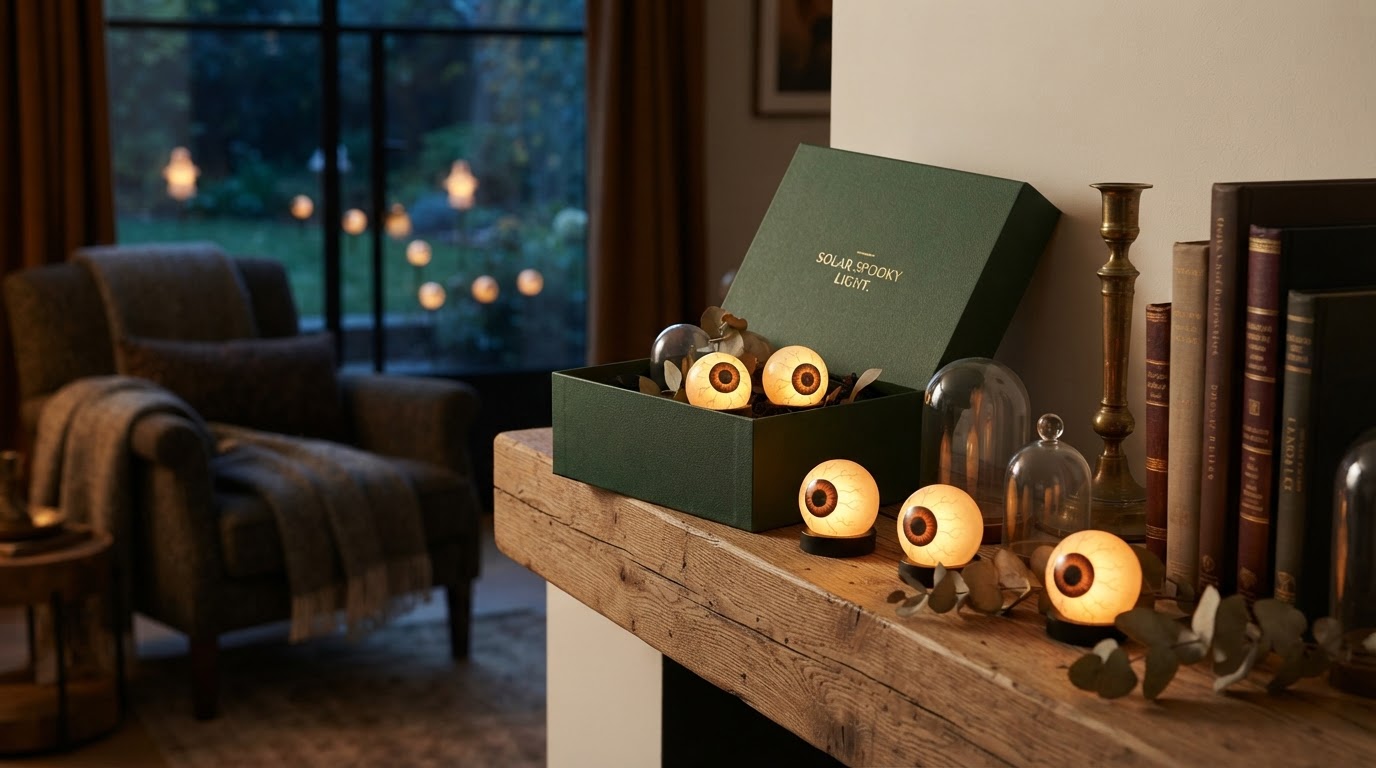
Solar Spooky Light Framework for Glowing Eyeball Decor
 Priya RamanSenior Analyst
September 13, 2026 — The rising demand for motion-sensitive yard aesthetics has positioned Solar Spooky Light as a primary solution for low-maintenance, high-impact seasonal displays. As homeowners transition away from corded electrical setups, solar-powered kinetic fixtures like glowing eyeballs have become a central component of modern landscape design. According to data from eBay, these Spooky Glowing Eyeball Solar Lights Outdoor (2 Pack) offer a lighting duration of approximately 6 to 10 hours after a standard charge cycle, providing reliable illumination throughout the night.
The Three-Axis Placement Matrix
When evaluating these fixtures, two axes matter here: the oscillation range and the light-to-shadow ratio. Once you see it this way, selecting the right placement becomes a matter of technical alignment rather than guesswork. The Solar Spooky Light framework evaluates these units based on their ability to mimic organic movement. The kinetic "sway" of the eyeball stake relies on a flexible stem that reacts to ambient wind speeds, while the internal LED provides a fixed focal point. The decision rule for optimal impact is to cluster these units in groups of three or more near low-lying shrubbery. This creates a depth-of-field effect where the glowing orbs appear to peer through foliage. Similar to the installation of spooky solar pathway stakes, these eyeball units require direct UV exposure for 5 to 8 hours to reach peak performance. The technical specifications for these units typically include a weather-resistant housing designed to withstand autumnal precipitation, a feature further explored in our analysis of how ghost solar garden lights handle severe storms. While solar powered skull lights outdoors provide a wider wash of light, the eyeball units focus on high-contrast, pinpoint visibility. This concentrated output ensures that the "glowing" effect remains sharp even in areas with moderate light pollution. Furthermore, the outdoor solar ghost lights provide a useful benchmark for energy conversion, as both product types utilize similar monocrystalline silicon panels to maximize energy harvest during shorter autumn days.
Expert tip: To maintain the 6-10 hour runtime, ensure the solar panel is tilted at a 45-degree angle toward the southern sky, as even partial shading from decorative tombstones can reduce battery saturation by up to 40%.
Think of it as a matrix of visibility and movement that defines the success of your seasonal display.